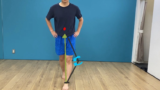
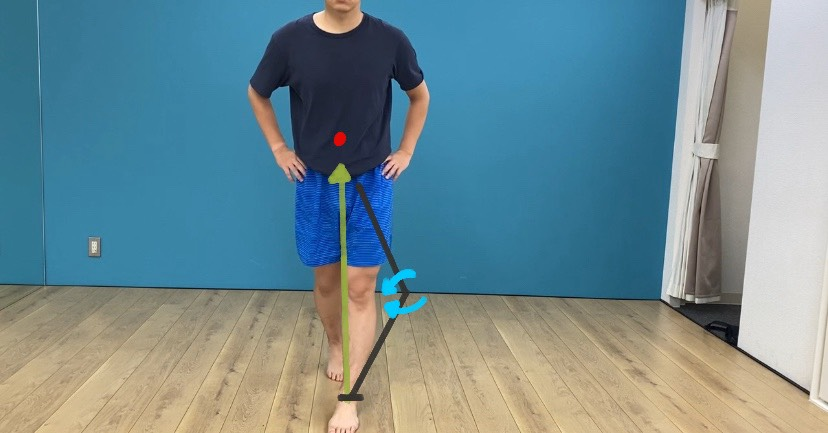
In the previous article, we explored how the knee tends to bend inward—forming a “K‑shape”—when viewed from the front, and how this movement increases stress on the body.
Today, we’ll look at which structures in the body help prevent this “K‑shaped” collapse, especially during walking.
Throughout this article, knee osteoarthritis will be referred to as knee OA.
How the Knee Moves During Walking
The graph below represents how the knee bends and straightens during a normal walking cycle.
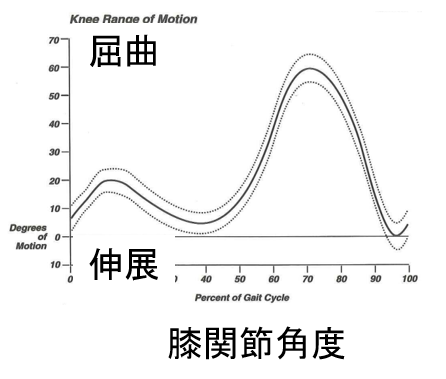
- The vertical axis shows the degree of knee flexion (bending).
- The horizontal axis represents the walking cycle, normalized to 100%.
- “Flexion” means bending, and “extension” means straightening.
A key point is that The knee bends twice during one walking cycle.
The first bend—right after the foot contacts the ground—is especially important for healthy movement.

This is also the moment when the knee is most likely to fall into the “K‑shape” described previously.
The Structures That Prevent the Knee From Collapsing Inward
So what prevents the knee from falling into that “K‑shape” during the first flexion?
The answer lies in a group of structures called the Posterolateral Corner (PLC) of the knee.
The PLC includes:
- The lateral collateral ligament (LCL)
- The popliteus tendon
- The popliteofibular ligament
These structures, located on the back‑outer side of the knee, help stabilize against varus (inward collapse) and external rotation forces (Sugiura et al., 2016).
Additionally, the quadriceps muscles, which straighten the knee, also play a crucial role in preventing the “K‑shape” collapse.
In short, ligaments, tendons, and muscles work together to keep the knee aligned during walking.
How Normal Walking Differs From Walking With Knee OA
In normal walking, the knee bends and then extends again.
Why does the knee move this way?
- To absorb impact
- To convert absorbed energy into forward propulsion
These functions allow us to walk efficiently.
But what happens in people with knee OA?
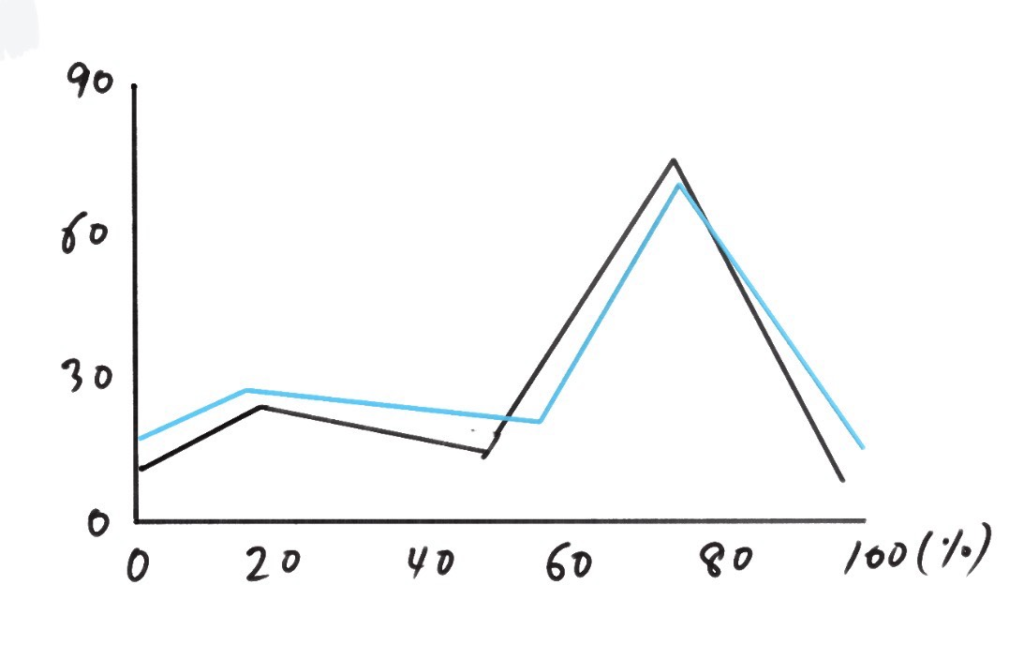
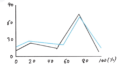
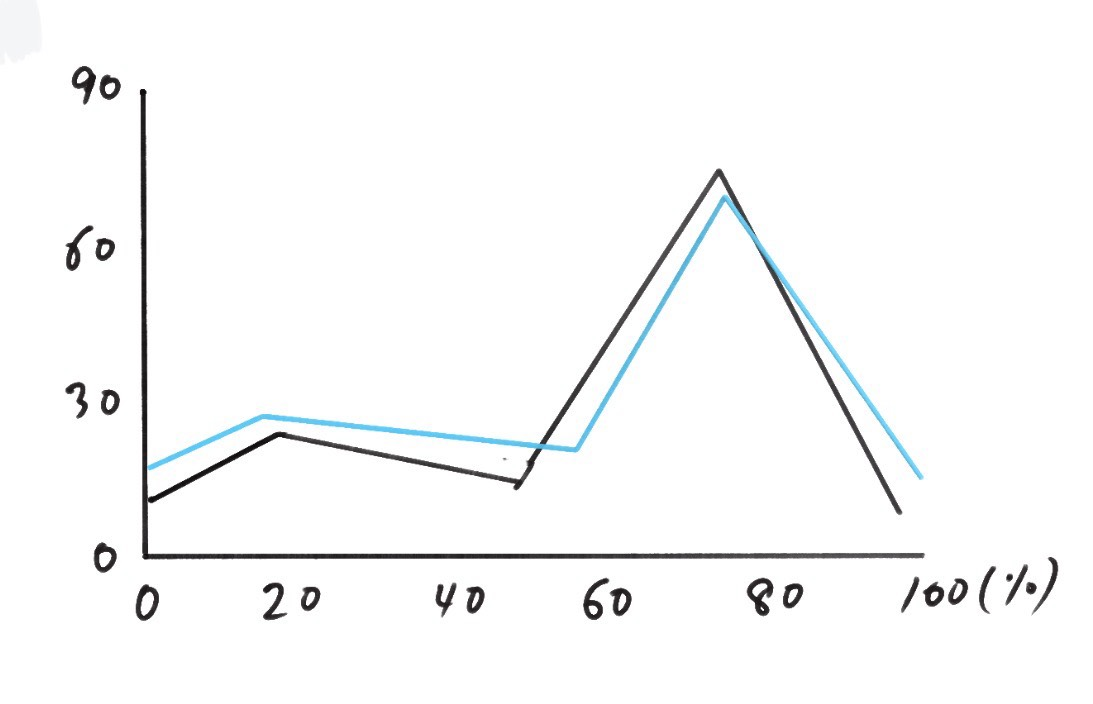
A study by Suzuki et al. (Scientific Reports, 2023) compared knee movement in people with and without knee OA.
- Black line: normal knee movement
- Blue line: knee OA movement
Key findings:
- The knee OA group had greater knee flexion just before foot contact
- They also showed less extension after the initial bend
This means that people with knee OA have difficulty performing normal knee flexion–extension during walking.
The study also found that:
・The more severe the knee OA,
・The smaller the knee’s bending and straightening range,
・And the more pronounced the “K‑shape” collapse becomes.
This suggests that people with knee OA rely less on quadriceps strength during walking and instead shift their movement toward the “K‑shape” direction, altering how forces are transmitted through the knee.
As a result, the knee’s ability to:
- Absorb shock, and
- Convert energy into propulsion
becomes reduced.
Summary
Let’s recap the key points:
- In normal walking, the knee bends and straightens smoothly.
- During the first bend after foot contact, the PLC and quadriceps help prevent the knee from collapsing inward.
- In knee OA, the knee bends and straightens less, reducing shock absorption and propulsion.
- As knee OA progresses, people rely less on quadriceps strength and show more “K‑shape” collapse during walking.
In the next article, we’ll explore specific exercises that can help improve knee function.
Thank you for reading!